Showing posts with label legislated wage increase. Show all posts

Tuesday, August 18, 2026

Wage Hike Injunction, Metro Floods Sending Workers Deeper to a Life of Poverty


Photo from Manila Collegian

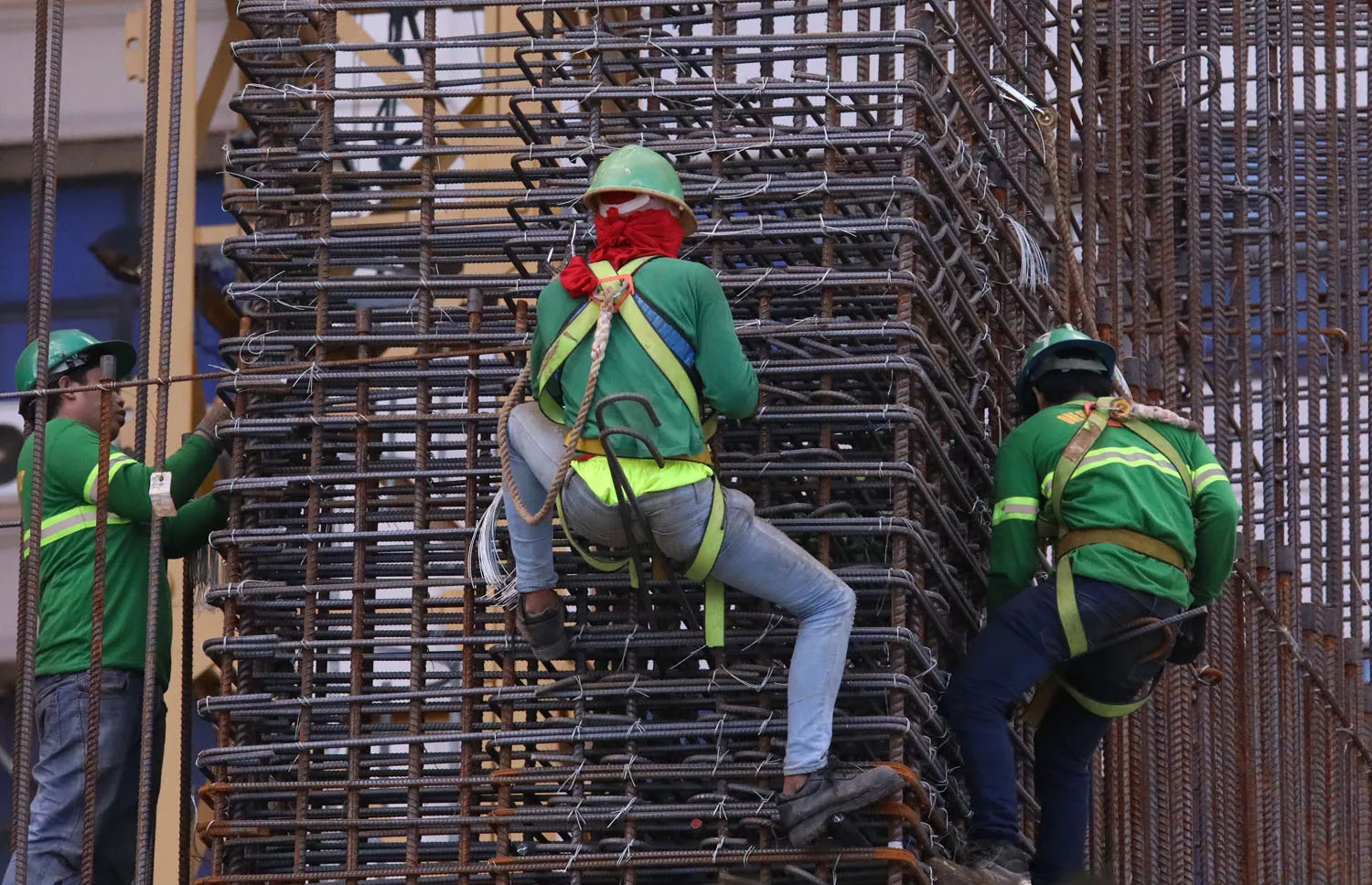
A combination of days without work due to flooding with the non-implementation of the ₱60 wage hike (first tranche) due to court injunction is making life harder for minimum wage workers in the National Capital Region (NCR), Partido Manggagawa (PM) said in a statement Tuesday.


“The 1.1 million minimum wage workers in NCR are losing ₱66,000,000.00 a day from the Pasig court’s unjust imposition of injunction against the ₱60 wage hike. Add another day without work due to flooding for the same number of workers and the loss reaches a staggering ₱764,500,000.00 (₱695 present minimum wage x 1.1 million workers),” explained PM Chair Renato Magtubo.


Magtubo explained further that unlike Judge Manongsong, a government employee who keeps her salary intact when work in government is suspended due to bad weather, private sector workers get no pay under the principle of ‘no-work-no pay’.


“Kaya nga ‘imortal’ ang tawag sa mga manggagawa sa pribadong sektor sa ganitong mga panahon dahil sinusuong nila ang panganib at mas kinatatakutan nilang mawalan ng kita sa isang araw kaysa mabasa o lumubog sa baha,” said Magtubo.


The group stressed that this combination of labor injustice and climate crisis is a burden both lawmakers and the President must address at the policy level as well as in program implementation as the principle of check and balance between the co-equal branches of government doesn’t undermine the worker’s right to life and the rising standard of living.


Magtubo added: “This life and injustice completely escaped the mind of Judge Manongsong when she did the unimaginable issuance of TRO and injunction against the P85 wage hike.”


“Hindi kayang i-dismiss ni Judge Manongsong and pagbuhos ng ulan at baha, pero kaya nitong i-dismiss ang petisyon ng dalawang kapitalista lalo na at walang hurisdiksyon ang kanyang korte sa usapin ng sweldo,” said Magtubo.


Labor groups were pressing for the lifting of the court injunction against the ₱85 wage hike injunction before the Supreme Court, at the same time calling for Congress to rectify decades of labor injustice by abolishing the provincial rate system with the enactment of the ₱200 wage hike and the National Minimum Wage Law. 


PRESS RELEASE

18 August 2026

Friday, August 14, 2026

EMPLOYERS HAVE NO RIGHT TO CRY “DUE PROCESS” AFTER SKIPPING WAGE BOARD HEARINGS


Partido Manggagawa (PM) Chairperson Renato “Ka Rene” Magtubo today condemned the Pasig Regional Trial Court’s injunction against NCR Wage Order No. 27, calling it an illegal intrusion into a process that belongs solely to the wage boards. 


“Absent sa hearing ng NCR Wage Board, tapos kay Judge Manongsong nagpakanlong?” complained Magtubo.


Magtubo, former PM partylist representative and now a Marikina City Councilor, also slammed petitioner-employers — Readycon Trading and Construction Corp and R-II Builders - for skipping RTWPB consultations and public hearings, then running to court. 


“They skipped the venue the law required them to attend. They bypassed the NWPC, their proper forum. Now they claim due process and forum-shop in the regular courts. You cannot refuse to speak, then cry you were not heard,” he said. 


Citing Articles 123 and 126 of the Labor Code, Magtubo said the law bars regular courts from stopping wage order proceedings. Exclusive jurisdiction lies with the Regional Tripartite Wages and Productivity Board and the National Wages and Productivity Commission. 


“The law is clear. The Pasig RTC injunction is a plain jurisdictional defect, not a legal remedy,” he said. 


Magtubo argued further that Wage Order No. 27 gives workers only an ₱85 increase — ₱60 in July 25 and ₱20 in January 2027. Even with this, wages remain far below the ₱1,300 a day a family of five needs in NCR. And yet even this meager relief is being strangled in the regular courts,” he said. 


He warned that the delay directly hurts workers who followed the legal process. “Every month this injunction drags on is a month of stolen wages. If employers can use regular courts to indefinitely suspend a wage board decision, where do workers go to claim a right the law already granted?” 


Magtubo also urged Congress to amend Articles 123 and 126 to penalize courts that entertain such injunctions and to fast-track their dismissal. 


“Beyond patching the law, this proves the regional wage board system is too slow and too vulnerable. It is time Congress legislates a national minimum wage indexed to the cost of living — insulated from legal harassment and court interference,” concluded Magtubo.


PRESS RELEASE 

August 14, 2026 


Thursday, August 13, 2026

PM condemns Pasig judge’s forever TRO


The labor group Partido Manggagawa slammed the decision of Pasig Regional Trial Court Judge Marie Joyce Manongsong to grant the employers’ petition for a writ of preliminary injunction against the implementation of the P85 wage order for minimum wage earners in the National Capital Region.


“Judge Manongsong’s forever TRO deprives at least a million minimum earners from benefiting from the recent wage order. The forever TRO suspends the wage hike for workers and gives capitalists a profit increase. Pinalawig ng preliminary injunction ang pagKAKAMALi ni Manongsong na patawan ng TRO ang wage order, bagay na singlinaw ng sikat ng araw ay di maaring gawin ayon sa Labor Code at Wage Rationalization Act,” asserted Rene Magtubo.


Magtubo argued that “If just two employers can afford to post a P10 billion bond then why can’t all the NCR-based capitalists afford to pay the P60 first tranche? P10 billion is enough to pay the P60 wage increase for 1.1 million minimum wage earners for a total of 151 days or almost 6 working months. Capitalists have the capacity to pay the wage hike. But they are so greedy and don’t want their profits reduced.”


Magtubo called the workers in Metro Manila and the whole country to express their outrage at the forever TRO against the wage hike. “Judges and employers, not just in NCR but in other regions, can always invent legal arguments against the wage hike and for a profit increase. Workers should wage an extra-legal battle to win a wage increase!”


Press Release

Partido Manggagawa


Monday, August 3, 2026

Judge’s TRO favors billionaires over hungry workers


Labor organizations under the Nagkaisa labor coalition, including Partido Manggagawa (PM), will file today a Motion for Intervention before the Pasig City Regional Trial Court to oppose the temporary restraining order (TRO) issued by Judge Manongsong against the implementation of the ₱85 NCR wage hike. 


The intervention will argue that the RTC has no jurisdiction to stop the implementation of a wage order, as the Labor Code expressly prohibits courts from issuing injunctions or TROs against proceedings and decisions of the wage boards. 


More than a legal error, however, the TRO reflects a disturbing lack of empathy and social sensitivity toward millions of workers who continue to struggle with soaring prices while waiting for long-overdue wage relief.


We call on Judge Manongsong to immediately dismiss the petition filed by RII Builders, reportedly owned by a billionaire, and Readycon, a company reported to be a major DPWH contractor. It is deeply unjust that the plea of a handful of wealthy corporations was acted upon with such urgency while the daily hardship of minimum wage earners received little consideration. Courts should not become instruments for delaying the constitutional commitment to social justice by shielding powerful business interests at the expense of workers who can barely make ends meet.


The case likewise exposes not only the legal infirmity of the TRO but also the weakness of the country’s wage-setting system and the failure of the Department of Labor and Employment to adequately defend the wage order. 


The incident underscores the urgent need for Congress to enact the proposed ₱200 legislated wage hike and undertake comprehensive reforms of the prevailing wage determination system so that workers’ incomes are no longer held hostage by business interest through litigation every time a modest wage increase is granted.


PRESS RELEASE

Partido Manggagawa

August 3, 2026


Tuesday, July 28, 2026

PM REACTION TO PBBM’s SONA


The President’s address contained many technical reports, but it failed to meaningfully address the pressing concerns of workers, such as wages, wage reform, jobs, and other labor issues—even as President Marcos acknowledged that workers and the middle class should not be forgotten.


The proposed expansion of tax exemptions may benefit above-minimum wage earners, but it provides no relief to minimum wage workers and those earning even less, who have long been exempt from income tax. 


There was also no mention of the proposed P200 legislated wage hike and the abolition of provincial rate through the enactment of the proposed National Minimum Wage Law.


On the issue of corruption, the President reduced it to his personal grievance and the sacrifice involved in pursuing charges against Martin Romualdez. However, his speech fell short of proposing systemic reforms such as an anti-political dynasty law and electoral reforms.


On lowering electricity prices, removing the systems loss charge and the VAT on it will have only a minimal impact on consumers’ bills because these account for only a small portion of total electricity costs. The 12% VAT on generation, transmission, and distribution charges remains in place. Likewise, the persistence of monopolies in the power sector and the country’s continued dependence on imported fossil fuels for energy security remain the fundamental drivers of high electricity prices.


While the government’s endorsement of the US-led Pax Silica initiative is expected to generate high-quality jobs, the President made no mention of its potential implications for the country’s electricity and water security, nor of the risks it poses to the existing jobs of Filipino workers in the platform economy.

PRESS STATEMENT

Partido Manggagawa

07.28.2026


Sunday, July 27, 2025

Bigong Pilipinas – War of Dynasties, No War on Poverty

Photo from Rappler


While political dynasties are locked in a bitter battle for power, the working class suffer. Workers continue to face chronic poverty and exploitation, three years under the so-called “Bagong Pilipinas” of the Marcos administration.


Bigo pa rin at hindi nagbago ang lagay ng Pilipinas. There is no genuine war on poverty, only a war for power among political clans.


Our portrayal of State of the Nation Address (SONA) tomorrow may sound too negative, but that is the hard truth we need to confront. SONA’s usual summation declaring the state of the nation as sound is an insult to millions who cannot afford basic necessities.


Wages remain below poverty threshold


In all 17 regions, the minimum wage remains below the outdated poverty threshold, forcing workers to live on starvation pay. Despite the government claims of progress with the economy inching up to reach the upper middle-income status, the reality is stark: the cost of living continues to rise, while wages lag far behind. A growing economy must have provided workers with decent jobs, but low pay and contractual jobs dominate the workplace.


In short, workers are drowning under the weight of high prices for food, utilities, transportation, and basic services. Mas mataas pa ang baha sa sweldo, ang mas tumitibay ay katayuan ng tiwali sa gobyerno kaysa sa trabaho ng mga Pilipino!


The workers’ demands are clear:


1.           Immediate wage hike to a level that assures a life of dignity for all workers;

2.           End contractualization by stopping the rampant use of contractual and precarious employment that robs workers of job security and benefits;

3.           Lower prices of goods and services by taking concrete steps to control inflation and reduce the cost of essentials like food, healthcare, energy, housing, and transportation.


Accountability


We likewise call on all workers and citizens to hold leaders accountable. At this moment, impeaching Sara Duterte is still the right thing to do, but the struggle for reforms must go beyond this. Raising the Filipinos’ quality of life and standard of living is a constitutional duty as equally important as ensuring accountability and good and governance.


Finally, we believe genuine reform will only come through the organized strength of the people, not the empty promises of political dynasties.

Friday, May 23, 2025

Cabinet resignation is not a bold reset but just a marketing gimmick if not matched with policy shift

Rappler photo


The labor group Partido Manggagawa (PM) criticized President Bong Bong Marcos Jr.’s call for the resignation of his entire cabinet as just a marketing gimmick and not a bold reset since it is not complemented by a policy shift that addresses hunger and poverty. President Marcos Jr. announced the cabinet revamp yesterday as his response to the loss of the administration senatorial slate and falling popularity ratings.


“The welfare of workers and the poor will not improve if there are new faces in the cabinet who implement the same policies of cheap wages, endo jobs and gutting of public services. Instead, labor groups want to see PBBM declare a bold reset in policies: certify the P200 wage hike as a priority legislation, support the security of tenure bill and return the Philhealth funds so it can scale up its services to members,” stated Rene Magtubo, PM national chair and re-elected Marikina councilor.


PM dared the administration to heed these concrete demands as an effective response to the discontent of voters as revealed in the recent polls and surveys. “PBBM also needs to shape up, not just his cabinet secretaries. It's not only the performance of the cabinet secretaries that should be reviewed and evaluated, but also PBBM's policies and programs that fail to address the serious problems of corruption, poverty, low wages, high prices of goods, and inadequate public services in health and education,” Magtubo explained.


To recall, last Labor Day, PBBM rejected the call for a legislated wage hike and instead asked the regional wage bords to respond to the demand for salary adjustments. Yesterday, the NCR wage board called for a consultation with labor groups. The group Kapatiran ng mga Unyon at Samahang Manggagawa attended the consultation but called on the NCR wage board to defer to Congress so that the latter can address the wage demand through legislation.


Magtubo added that “Cabinet members serve at the pleasure of the president and are thus his alter egos. Therefore, if the policies and programs fail to address the worsening problems, the primary responsibility lies with the president—not just his alter egos.”


Kapatiran is calling for a P200 national wage hike to recover the P126 erosion of wages due to inflation and P74 as share in the rise in labor productivity. PM is supporting Kapatiran’s demand for a legislated P200 salary increase. 

Sunday, January 5, 2025

2024 in Review: Philippine workers caught between economic difficulties and political intramurals [EXPANDED VERSION]


Last year, workers in Philippines faced severe challenges in their wages, benefits and working conditions as they were caught in the vise of economic difficulties brought about by the cost-of-living crisis and escalating intramurals between the two leading political dynasties[1] in the country.


Demands for wage adjustment


While the average inflation of 3.2% in 2024 was almost half compared to 2023, it continued to erode the purchasing power of wages. Relatively higher food prices also disproportionately hurt minimum wage earners and informal workers with 4.3% inflation for the bottom 30% of the income households. Thus, the demand for another round of minimum wage increases in 2024 was a recurring theme for organized labor. The campaign for a wage hike was two-pronged with wage bills for a PhP 150 (USD 2.58) increase filed in parliament and at the regional wage boards[2].


The Senate[3] approved a P100 (USD 1.72) increase in the minimum wage in February 2024. This advance was a result of organized labor successfully leveraging the rift between the upper and lower houses of parliament over the latest move to amend the Constitution. The Senate stood pat against charter change and instead enacted the salary increase. However, the reverse was the case in the House of Representatives[4]. Despite conducting hearings on pending wage hike bills, the House Labor Committee sat on the proposal and basically killed it. In contrast with this inaction on the workers’ demand for a wage adjustment, the House of Representatives was fast and furious with parliamentary hearings on the drug war and extra-judicial killings during former President Rodrigo Duterte’s administration and the investigation on the controversial budget of the Office of Vice President Sara Duterte and the Department of Education during her tenure.


The year ended with no legislated wage hike but with wage orders for several regions. Notwithstanding the wage orders, minimum wages in all the regions—including those which increased—remained below the official poverty line. Even though the threshold was assailed for being too low—as the controversy over the official daily food budget revealed. With the wage boards perpetuating a system of poverty wages, calls for the abolition of the regionalized wage mechanism became popular.


Fight over public health insurance


On another front, organized labor and civil society allies fought a defensive war to keep the funds of Philhealth—the public health insurance system—devoted to improving benefits services to members and providing services for indigents as mandated by the Universal Health Care law. PhP 60 billion (USD 1.03 billion) of Philhealth’s funds were transferred by President Bong Bong Marcos Jr. to fund unprogrammed items in the national budget before the Supreme Court in October stopped the last tranche of PhP 29.9 billion (USD 0.51 billion). The Nagkaisa (United) labor coalition was an intervenor in the Supreme Court case to oppose the transfer of PhP 90 billion (USD 1.55 billion) of Philhealth funds to the National Treasury.


Another battle erupted in December when the Congressional bicameral conference committee removed the subsidy for Philhealth along with cuts in other social services. The labor coalition Nagkaisa led protests in key cities, including a major rally in the capital, to call for the restoration of the Philhealth subsidy and social services budget. But President Marcos Jr. did not heed the popular clamor as he signed the national budget by year end with the much-assailed budget insertions for political patronage funds kept intact. Among these was PhP 26 billion (USD 0.45 billion) in unprogrammed budget items which has been criticized as funding for electoral patronage and tagged as the brainchild of House Speaker and presidential cousin Martin Romualdez. This means that formal and informal workers will now have to beg politicians for assistance for medical and other emergencies instead of getting health insurance as a right. As if on cue, the election commission allowed the distribution of patronage projects even during the midterm elections this year—breaking with the long-established rule of prohibiting the disbursement of public money during the campaign period since such is easily exploited as a means for vote buying.


Prospects for the year


The start of the year greets workers with a higher social security contribution of 5% to be deducted from their wages. This will result in lower take-home pay for private sector laborers. To keep the social security system afloat while easing the burden on workers, the government should subsidize the employee share. This is a tough ask as the Marcos Jr. administration would rather have workers and the poor solicit patronage from politicians. This promises to be another plank of organized labor’s demand for quality public services and universal social protection.


Even as demands for higher pay, lower prices, more jobs and decent work remain very popular issues during the election period, prospects are bleak that the polls will result in positive outcomes for workers given that political dynasties—which are evolving from fat to obese[5]—dominate the landscape. Workers have no allies either in the two main political dynasties—the Marcoses and the Dutertes—which will be fighting for supremacy in the coming May 2025 polls.


Continuing recent trends, many labor-based groups have been eased out of the party list system[6] as it has been swamped by electoral vehicles for politicians who cannot compete in district polls. The party list system has warped into just another pathway for members of obese dynasties to enter the House of Representatives through the backdoor.


Nonetheless, groups such as Partido Manggagawa (PM) are engaging with local candidates for the establishment of public laundromats and whole day childcare centers to ease the care burdens of employed and unemployed women. Along with such low-hanging fruits, PM also is campaigning for the passage of the Prevention of Adolescent Pregnancy bill in response to the crisis level of teenage mothers. Against the tide of sleek TV and FB ads of national candidates, PM is conducting information dissemination in working-class communities during the elections for what it calls “Apat na Dapat” (Four Demands): wage hike, regular jobs, social services and national sovereignty.


Workers will have to endure worse economic difficulties as political infighting heightens in 2025 and the remaining years of the Marcos Jr. administration. Nonetheless, this situation also motivates organized labor to engage with public outrage over wanton government corruption and dynastic political dominance. A big multi-sectoral rally this month promises to jumpstart a robust movement for good governance, in which workers’ demands should be embedded and integral.


By Judy Ann Miranda, Secretary General of Partido Manggagawa and a labor feminist.


[1] Political dynasties refer to influential families dominating elected positions of power

[2] Appointed bodies with the mandate to decide on minimum wage increases

[3] Upper house of parliament

[4] Lower house of parliament

[5] Social scientists have used the terms thin and fat as a typology for political dynasties

[6] Party list was an innovation in the Constitution to facilitate the election of underrepresented groups, like labor, to the House of Representatives

Monday, August 19, 2024

Minimum wage earners are poor according to PSA “fact reveal”


Photo from Rappler

The latest poverty statistics released by the Philippine Statistics Authority (PSA) last week show that families with a minimum wage earner as a breadwinner live below the poverty line. “PSA’s ‘fact reveal’ exposes the sad truth that minimum wage earners are working poor as their families survive below the poverty threshold which is unrealistically low. Thus, the urgency of a PhP 150 legislated across-the-board wage hike for all workers,” stated PM national chair and a Marikina city councilor.


“The minimum wage is highest in Metro Manila, where the wage board has already granted an adjustment last month. Yet the monthly income of a minimum wage earner in NCR is just PhP 14,190 (P645 x 22 working days). This falls below the PhP 15,713 poverty threshold in Metro Manila, according to the PSA,” Magtubo explained.


He added that the same working poor scenario exists for minimum wage earners in highly industrialized areas like Calabarzon, Central Luzon and Cebu. “The ‘minimum wage-poverty threshold gap’ is worse for workers in Calabarzon, Central Luzon and Cebu where no salary adjustment has been granted yet by the inutile wage boards. In Calabarzon the monthly minimum wage is PhP 11,440 but the poverty threshold is PhP 15,457. In Central Luzon the wage is PhP 11,000 but the threshold is PhP 16,046. Finally, in Cebu the monthly minimum wage is PhP 10,296 while the poverty threshold is PhP 14,397. The minimum wage-poverty threshold deficit ranges from PhP 4,000 to 5,000 in a month for these industrialized areas where minimum wages are higher than the rest of the country, except Metro Manila,” Magtubo elaborated.


He called for a legislated across-the-board wage hike of P150 to recover the lost purchasing power of workers nationwide. PM is calling on Congress to act on the demand for a salary increase.


Magtubo added that “It is a scandal that the minimum wage—which is a floor supposed to protect workers and their families—fails to rise above the poverty threshold. And this holds not just for Metro Manila but for all regions. We are a nation of working poor. Sa kabila ng sipag at tyaga ng mga manggagawa, nanatiling mahirap ang kanilang mga pamilya.”


“Further, we can question the accuracy of the poverty threshold estimates. Suffice it to say that even Sec. Balisacan found it difficult to defend the P64 food poverty threshold and stated that it needs revision. This admission from officials is good to hear but action from government is what the working poor need,” Magtubo averred.

August 19, 2024

Sunday, August 18, 2024

“Gutom Na Pilipino” (GNP) persists despite economic growth

Photo from UCA News

Tuesday, March 19, 2024

Wage clustering is better than regionalization but one national minimum wage is best


According to Partido Manggagawa (PM), the proposal of Representative Joel R. Chua (3rd District of Manila) to replace the current wage regionalization scheme with a wage clustering system is welcome in the sense that it founded on a recognition of the failures of the existing wage fixing system and thus opens a window for a discussion of a better mechanism. “Wage clustering is better than regionalization but one national minimum wage is best,” Rene Magtubo, PM national chair, explained.


He added that “We agree, as Rep. Chua asserts, that wage regionalization has led a huge gap between wages of regions that are not substantiated by differences in cost of living, and also has led to complexity in implementation as the DOLE has to monitor almost 50 minimum wages across the country.”


For this reason, PM is pushing for a national minimum wage as a floor. Differences between actual wages should be based on seniority, skills and productivity, according to the group.


“Also, while we insist that a replacement to the wage regionalization mechanism is also overdue, let us not lose sight of the immediate demand for a P150 across-the-board legislated wage recovery,” Magtubo emphasized.


PM is advocating for an “Apat na Dapat” in regard to the wage issue at the moment:


1. Php 150 across the board wage increase to recover wage loss due to inflation (immediate);


2. Non-wage benefits to enhance take home pay (for example: suspension of Philhealth contributions, reduction in withholding taxes for fixed income earners, social security subsidies, etc.);


3. Review and amend RA 6727 with the end in view of having uniform wage rates and satisfying the constitutional mandate of granting workers a living wage;


4. Enhance wage and benefits setting through collective bargaining negotiations by implementing the recommendations of the International Labour Organization’s High-Level Tripartite Mission so that workers can exercise freedom of association without harassment and intimidations, and unwarranted regulations. 


Friday, March 8, 2024

It takes decades for pro-women laws to get Congress’ nod compared to only 2 weeks for RBH 7


Haste doesn’t just make waste; it also bears a dubious agenda. This is according to women leaders in the labor movement who are celebrating International Women’s Day today.


Partido Manggagawa (PM) Secretary General Judy Ann Miranda, said they were referring to the Resolution of Both Houses No. 7 (RBH 7) that was swiftly approved by the House of Representatives’ Committee of the Whole with only six days of marathon hearing.


In an earlier statement, Miranda said the lightning approval of RBH 7 “is equivalent to a political hack which is unthinkable for a huge political body known for being laggard and protracted in its lawmaking process, especially when it comes to women and other social development agenda.”


Miranda cited as an example the lengthy years of enacting the reproductive health bill, which took 14 years, and now the proposed divorce law, as well as the right to safe and affordable abortion even for special cases, may even take longer.  The same is true, she added, when it comes to the proposed wage hike as the last act of Congress in legislating the wage hike was in 1989.


Photos of women’s rallies yesterday that includes demands against charter change and for public services can be accessed at PM FB: https://www.facebook.com/partidomanggagawa/ 

08 March 2024

Wednesday, February 28, 2024

PRESS RELEASE: When the lives of workers improve, the entire economy will also improve – Nagkaisa!

Photo from Manila Bulletin

In the ongoing hearing today regarding the legislated wage hike in the Lower House of Congress, members of the Nagkaisa! Labor Coalition urged lawmakers to prioritize the demands of workers for a P150 or higher wage increase, instead of yielding to the threats of employers that it will destroy the economy.


The group reminded lawmakers of the provision in the Constitution stating the "primacy of labor over capital" as a guiding principle in deciding on this contentious issue. They pointed out that for over three decades, employers have persistently opposed it, while the minimum wage of workers remained below the poverty line.


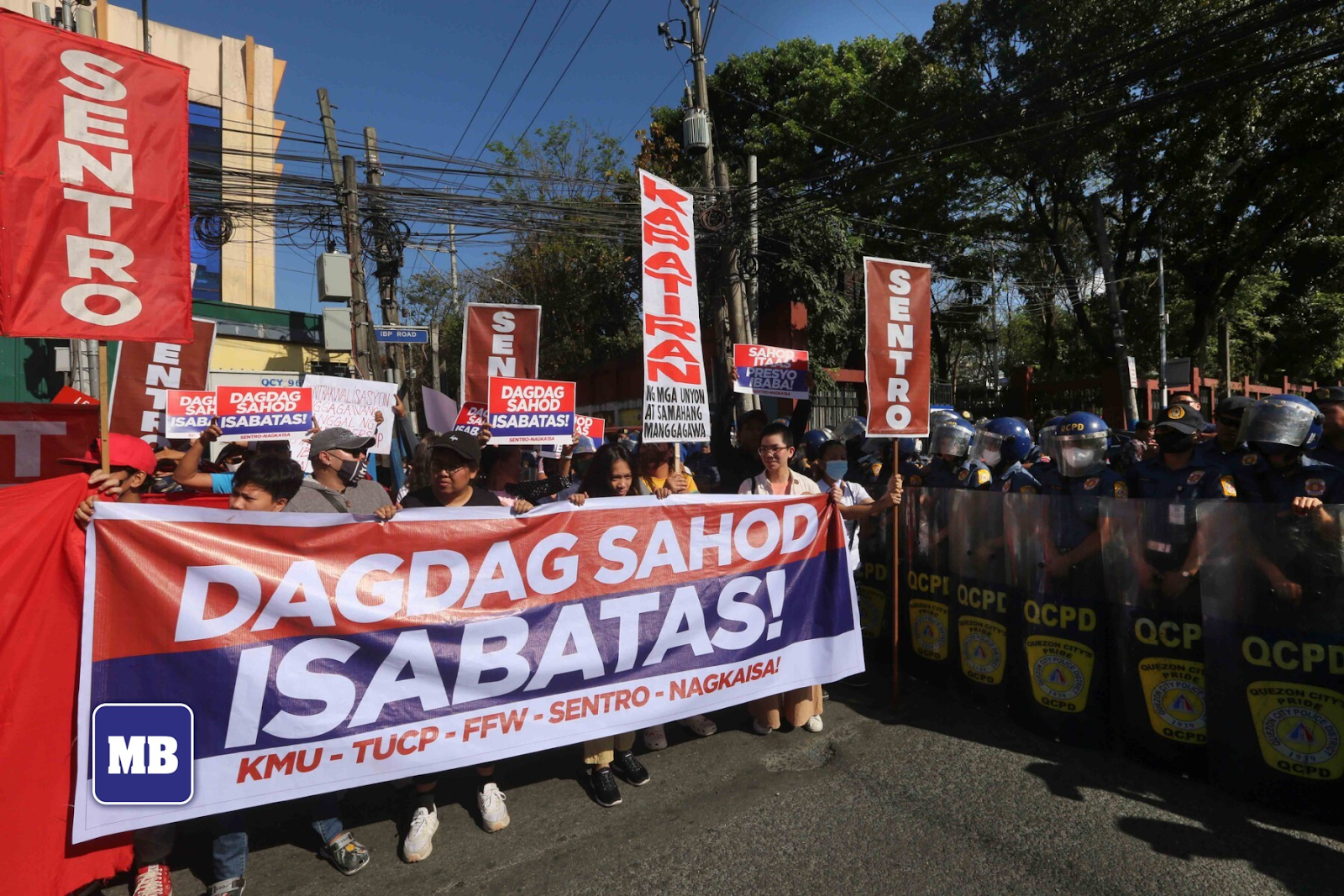
The group stated this position while staging a protest in front of the Batasan complex, along with the Trade Union Congress of the Philippines (TUCP), Kilusang Mayo Uno (KMU), Federation of Free Workers (FFW), Sentro ng Nagkakaisa at Progresibong Manggagawa (SENTRO), Kapatiran ng mga Unyon at Samahang Manggagawa (KAPATIRAN), Marikina Workers Alliance, National Federation of Labor (NFL), Partido Manggagawa (PM), TESEF, and Unified Filipino Service Workers (UFSW).


But before the protest could even start, the police dispersed them away from the Batasan gate and blocked their return, led by Precinct 6 commander, Col. Castillo. The labor groups condemned the actions of the police, stating that this was the second time they had done so, the first being against the youth just two weeks prior.


They called on the leadership of the PNP and Mayor Joy Belmonte to stop the police abuse at the Batasan, as it shows a lack of respect for freedom of expression and freedom of assembly.


The group asserted further that their petition for wage increase is not anti-MSME or anti-business because any additional income in the pockets of workers is returned to the economy through consumption in small businesses, compared to the huge profits of businesses that only go towards extravagant expenses of capital owners.


NAGKAISA! also mentioned that the economy of workers relies solely on wages, so while most survive in the formal sector and self-reliance in the informal economy, a wage increase has a more positive impact on the entire economy compared to if the majority of workers remain impoverished.


They noted that the highest minimum wage of P610 here in NCR has a real value lower than the national poverty line of P13,797 in 2023.


Aside from the wage increase in the private sector, NAGKAISA! supports a separate proposal for a wage hike for public sector employees.


NAGKAISA! also seeks to reform the wage-setting system in the country through legislation because for the past 35 years under RA6727 and regional wage boards, the majority of workers in the country have remained poor, which goes against the Constitution's mandate for the right to a living wage and a rising standard of living for their families.

February 28, 2024

NAGKAISA! Labor Coalition

Tuesday, February 27, 2024

Labor group to ECOP: You also need to feel how bad life is for ordinary workers


We can try to understand how employers feel about the pending wage hike proposals in Congress. But their permanent opposition to any proposal since time immemorial speaks volumes about their regard for the lives of ordinary workers in our country.


We see them constantly opposed to any wage hike proposal at the level of regional wage boards since 1989, and against the legislated wage proposals since 1999.


In other words, they will cry wolf against any wage proposal, but neglect to mention how workers suffered a life of poverty. They won’t tell us that GDP and labor productivity more than doubled during the last three decades, but real wages of workers remained flat.


In fact, even as they up the hype of apocalyptic death of local industry and el niño of foreign investors, the fact remains that minimum wages all over the country fall under the national poverty threshold of P13,797 per month for a family of five. The same is true when economic managers assure everyone that GDP will remain within the 6% trajectory. That won’t change the fact that after 35 years under the regional wage boards, guided by thousands of pages of Philippine Development Plans, more than 20% of our population remains poor, or close to half, according to the latest SWS survey on self-rated poverty.


The problem is that employers don’t feel this way as they always view wage hikes, union rights, and equitable distribution of wealth as anti-business. But we don’t require them to have a change of heart, in the same way workers won’t stop asking for fair share in the social wealth they have been creating for centuries. 


Why then is legislative action necessary for wage hikes? Simply put, the regionalization of wages under RA6727 was an epic failure. The highest wage rates, 35 years after, still fall short of meeting the poverty threshold. Moreover, regional wage policies have not succeeded in attracting investments to the country's poorer regions, despite being one of the law's intended objectives. There is also a low level of investment despite this low wage regime incentives.


We understand ECOP's emphasis on micro-enterprises as a central argument against wage hikes. However, framing the issue as a choice between inflation, unemployment, and small businesses overlooks the broader benefits of ensuring workers receive fair compensation. We maintain that our call for legislated wage hikes is not intended to harm small businesses; rather, we believe that the positive ripple effects of higher take-home pay extend further than keeping wages at starvation levels.

27 February 2024

Thursday, February 22, 2024

Social movements march against chacha, link up with church groups


Labor organizations and social movements on Thursday participated in the ecumenical gathering “PANAGHOY, PANALANGIN AT PANININDIGAN LABAN SA CHARTER CHANGE” event led by the Koalisyon Laban sa Chacha held at Plaza Roma, directly in front of the Manila Cathedral and the Commission on Elections office.


But before converging at Plaza Roma, sectoral and community groups gathered from eight in the morning at the Missionary Charity beside the Delpan Sports Complex in Tondo and marched towards Anda Circle to link up with other contingents.


Carrying the banner "Sahod Itaas, Cha-Cha Iatras" were the Federation of Free Workers (FFW), Partido Manggagawa (PM), and Sentro ng Nagkakaisa at Progresibong Manggagawa (SENTRO), all conveners of the NAGKAISA! Labor Coalition. Meanwhile, KALIPUNAN is comprised of groups Alyansa Tigil Mina (ATM), Kilos Maralita (KM), PAKISAMA, PM, SENTRO, and World March of Women.


Also joining the march were the Akbayan party, the human rights group In Defense of Human Rights and Dignity Movement or iDefend, Tindig Pilipinas, UPAC and DAMPA.


Urban poor residents from Parola and Baseco in Tondo, particularly those from Isla Puting Bato and Slip 0, called on the government to prioritize and fund housing programs for the poor instead of pushing for chacha which offers land ownership to foreign citizens. Women and youth participants also voiced their demands for wider social services and the eradication of violence.


In their related statements, the groups asserted that the Constitution is not the reason why many Filipinos remain poor. They argued that the real problem lies in the concentration of wealth in a few hands and the dynastic governance of the country's leaders.


They also claimed that charter change was never the people’s urgent concerns such as inflation, wage hike and unemployment, hence there is no reason for lawmakers to prioritize it.


The Koalisyon Laban sa Chacha is a coalition of church, sectors, and community groups launched on February 14 to oppose charter change while simultaneously advocating for the people's demands, deepening democracy, and good governance.


Following the mass, the coalition conducted their program including sectoral speeches, during which they called on the Comelec to completely halt the people’s initiative. Part of the action also included commemorating the People Power that began on February 22, 1986.


They vowed to continue opposing cha-cha until the people’s initiative and even the convening of ConAss for economic charter change are completely stopped. 

Photos and videos can be accessed at https://www.facebook.com/partidomanggagawa/


NAGKAISA! Labor Coalition

Kalipunan ng mga Kilusang Masa (KALIPUNAN)

February 22, 2024